Nappy Rash: What It Looks Like, What Causes It, and Gentle Ways to Help
Nappy rash — sometimes called diaper rash or diaper dermatitis — is one of the most common baby skin troubles. Here's what it looks like, what causes it, and how to help your baby's skin gently.
How to spot nappy rash
Nappy rash is an irritation of the skin in the nappy area. It can present as redness, scaling, blisters, or small pimples (papules). Many infants develop nappy rash at some point — you are not alone, and it doesn't mean you're doing anything wrong.
It often shows up when your baby is going through a big change: illness, a new food, or simply lots of changes in one day.
Why babies get nappy rash
Many aspects can contribute to nappy rash:
Infrequent nappy changes
The longer your baby stays in a soiled nappy, the higher the chance skin becomes inflamed.
Diarrhoea and acidity
Loose stools are more acidic and break down delicate skin faster.
Soiled nappies
Contact with urine and stools can irritate delicate skin. Prompt changes help keep the area clean and dry.
Diet changes
A variation in your baby's diet, such as when solid foods are offered, can change their skin's world overnight.
Antibiotics
Using antibiotics — or certain foods eaten by a breastfeeding mother — can contribute to nappy rash.
Friction from wiping
Wiping with disposable baby wipes causes friction on irritated skin and can contribute to nappy rash, especially after multiple changes.
Gentle ways to treat nappy rash at home
General nappy care information. Ask your GP or child health nurse for advice if your baby’s skin is sore or the rash persists.
Change the nappy as soon as it's dirty
We cannot stress this enough. The longer your baby stays in a soiled nappy, the more likely the skin becomes inflamed.
Clean with water, not wipes
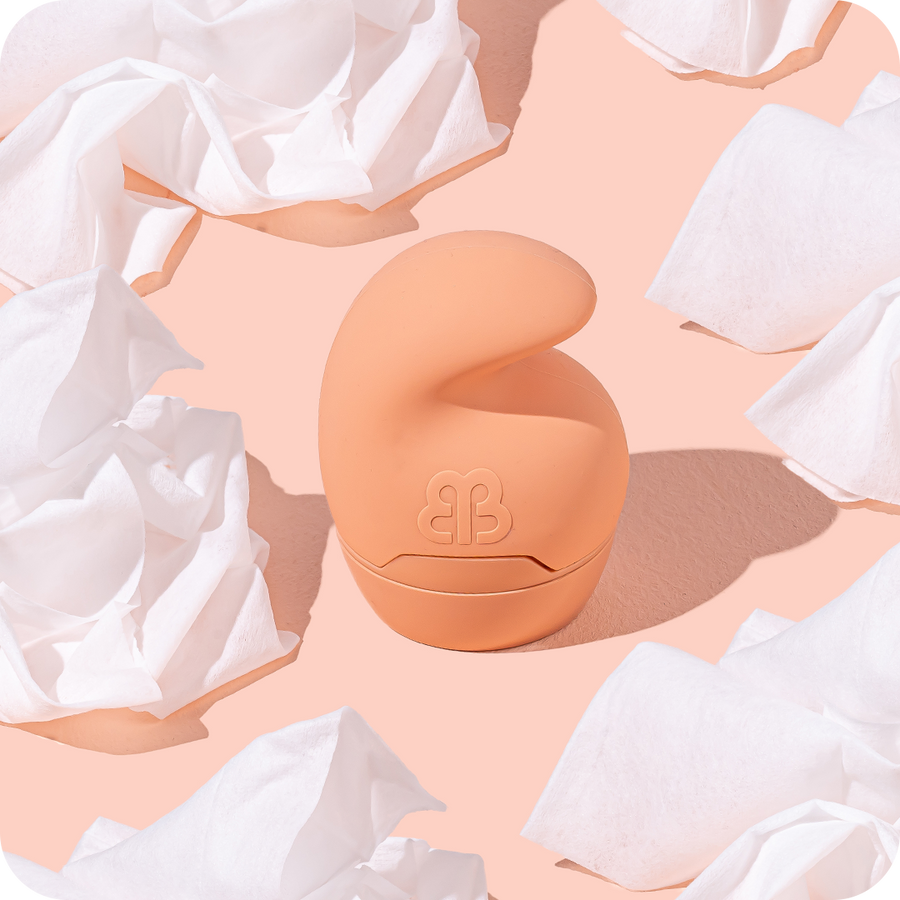
Use water to clean the skin during a nappy change. The Baby Bum Shower makes this easy — a gentle stream of water wherever you are.
Let the skin air dry
Skin must avoid a moist environment, which delays healing. A few minutes of nappy-free time helps.
Use a barrier cream
Apply a barrier cream that contains zinc oxide to protect the skin from the irritants in urine and stools.
If you do use baby wipes
Choose wipes that are unscented and contain no alcohol — scented or alcohol-based wipes can make nappy rash worse. And when the skin is already sore, water-only cleaning is the gentlest option.
Why water beats wipes for sore skin
Your baby's bottom is one of the most sensitive spots on their body. Wiping causes friction on irritated skin and contributes to nappy rash. Rinsing with a gentle stream of water is friction-free, and you choose exactly what touches their skin — water alone, or water with your choice of gentle wash.
Quick answers
Can baby wipes cause nappy rash?
Wiping causes friction on irritated skin, and scented or alcohol-based wipes can make a rash worse. For frequent redness or sore skin, water-only cleaning with something like the Baby Bum Shower is the gentle alternative.
When should I see a doctor about nappy rash?
If the rash is severe, has blisters or crusts, or isn't improving with gentle care, see your GP or child health nurse. This guide is general information, not medical advice.
What is diaper rash?
Diaper rash is the same condition as nappy rash — irritation of the skin under the nappy. It's simply the term used outside Australia and New Zealand.
How does the Baby Bum Shower help with nappy rash?
It rinses your baby clean with a gentle stream of water instead of wiping, reducing friction on sore skin at every change. It's not a medicine — it's a gentler way to clean.
Choosing a barrier cream?
Read Nappy Rash Creams Explained for a plain-language look at zinc oxide barriers, cleaning before cream and when to seek medical advice.
Gentler changes start with water. 💧
The Baby Bum Shower is $39 with flat rate shipping — $15 Australia-wide, $20 international. GST included.
Shop now