Nappy Rash Creams Explained
What barrier cream does, how gentle water cleaning fits in, and when your baby’s skin needs medical advice.
A sore bottom can make a routine nappy change feel anything but routine. With so many nappy rash creams on the shelf, it is easy to wonder what you actually need — and whether cleaning, drying or cream should come first.
The short answer: a barrier cream provides a protective layer between your baby’s skin and moisture or irritants. Gentle cleaning and keeping the area dry matter too. Cream is one part of nappy care, not a reason to leave a wet or dirty nappy on for longer.
This is general information, not a diagnosis or personalised medical advice. Baby Bum Shower is a cleaning device, not a medicine or a treatment for nappy rash.
What does nappy rash cream do?
Nappy rash — also called diaper rash — often develops when skin is exposed to moisture, urine or poo. Rubbing and irritating products can add to the discomfort. A barrier cream helps shield the skin from that contact.
Not every product described as a “nappy rash cream” has the same purpose. An everyday barrier cream is different from a medicated cream prescribed for a particular skin problem. If you are unsure which you have, ask a pharmacist rather than choosing by packaging alone.
Why is zinc oxide used in barrier creams?
Zinc oxide is a common ingredient in barrier creams. The Royal Children’s Hospital Melbourne recommends a thick barrier layer at each change and identifies zinc paste as its preferred option in its parent guidance.
You do not need to chase a particular brand or the most expensive tube. Ask a pharmacist about a suitable barrier product for your baby, read its instructions, and follow any advice from your GP or child health nurse.
How to use barrier cream in a gentle nappy-change routine
- Change promptly. Replace a wet or soiled nappy rather than waiting for the next scheduled change.
- Clean gently. Remove poo and gently clean with lukewarm water. The Royal Children’s Hospital suggests water on cotton wool, paper towel or a clean cloth. Avoid scrubbing sore skin.
- Let the area dry. Keep the nappy area clean and dry, and give your baby some nappy-free time when practical.
- Apply the barrier. Use the product as directed. Australian parent guidance recommends a thick protective layer at each nappy change.
- Keep an eye on the skin. If the rash is not improving, seek medical advice instead of repeatedly switching creams or adding more products.
Where does water fit — before or after the cream?
Cleaning comes before the fresh barrier layer. Water helps you clean the nappy area without adding fragrance or other wipe ingredients. Gentle technique still matters: do not rub or scrub just because you are using water.
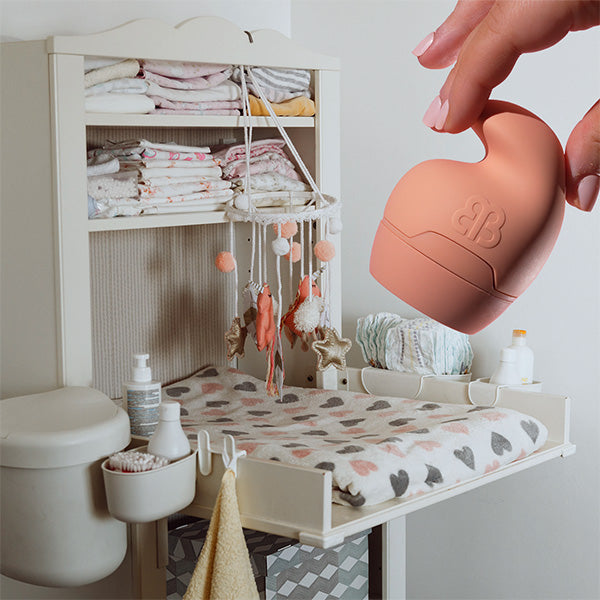
Baby Bum Shower offers a way to rinse with a gentle stream of water during a change. It can fit into the cleaning step before drying and applying your chosen barrier cream. It does not replace cream, professional advice or treatment prescribed for a rash.
There is no claim here that Baby Bum Shower prevents, cures or reduces nappy rash. The medical sources below support general water-based cleaning and barrier care; they do not establish clinical results for this device.
For more on the cleaning step, read baby wipes versus water. For a broader introduction, see our nappy rash guide.
Is barrier cream the same as antifungal cream?
No. A protective barrier and medicine for a fungal infection do different jobs. A rash that does not settle may need a doctor’s assessment and a different treatment. Do not assume that every red bottom is the same problem or start a medicated cream without appropriate advice.
What should I avoid putting on sore skin?
Keep the routine simple. Baby wipes can irritate some babies’ skin; gentle water cleaning is an option. The Royal Children’s Hospital advises against talcum powder and antiseptics for nappy rash. Before adding a new wash or cream, check whether it is suitable for your baby’s skin.
When should I ask for help?
If the rash is not going away, or you are worried about how your baby is feeling, contact your GP or child health nurse. A doctor can check the cause and decide whether medicine is needed. You do not have to keep trying products on your own.
A simpler routine, not another promise
Think of the routine as separate steps: clean gently, let the skin dry, then add the appropriate barrier. Baby Bum Shower belongs in the first step — a portable water rinse for nappy changes at home or out and about.
Sources and further reading
Care information checked on 29 October 2026 against Australian parent-health guidance. This article uses original wording; the links below let you read the medical guidance directly.